
As part of my research this summer, I decided to host a public event to showcase what I had been working on, and the collection of Polish anarchafeminist and queer zines to people who were interested in zines and zine culture. This was a vital component to my research, as I believed that it was important for academic research to not just exist in a vacuum, but also reach different communities in order to encourage them to educate themselves in relation to their daily lives and positionalities.
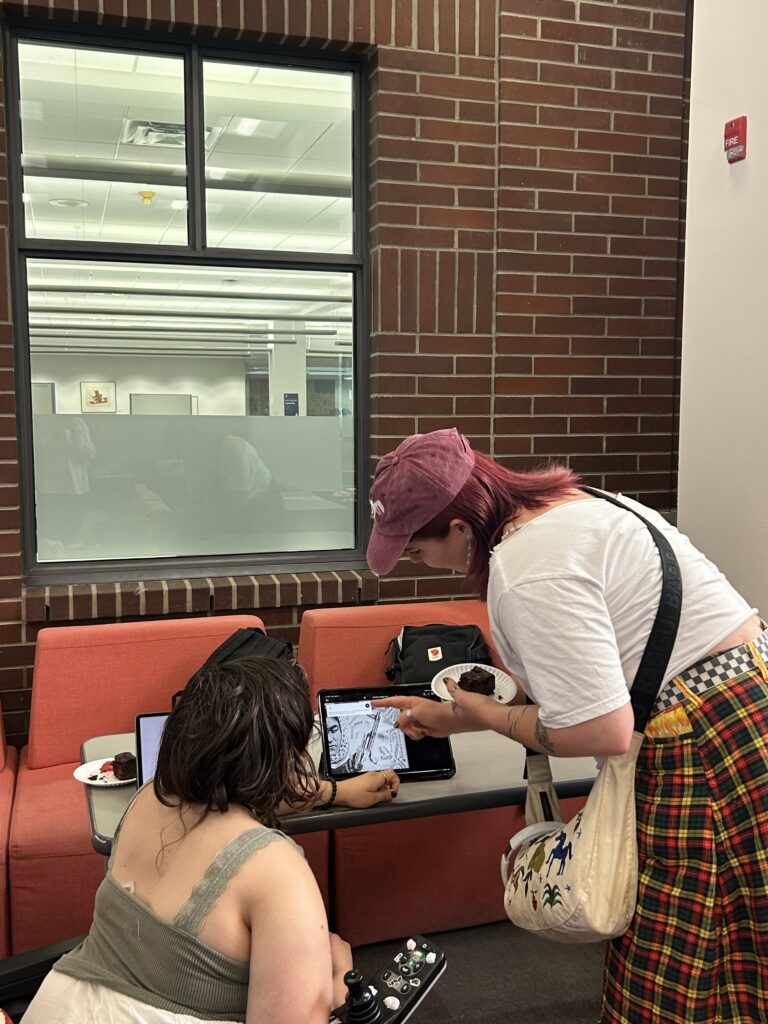
However, just as place and its complications have touched every aspect of this research project, it also impacted this event. British Columbia declared a state of emergency due to rampant wildfires in the province, on August 8th, which impacted the Okanagan region as well. It happened to be an unfortunate coincidence that my event was scheduled for August 10th, just a couple days after this announcement.
One of the reasons that I mention the circumstances of the Okanagan, and its wildfires, despite it not being directly connected to the feminist and queer discourses that we have discussed in previous blog posts, is because of how central place is in this research project and therefore acknowledging that these wildfires are also part of our understanding of place.
While wildfires can have natural causes, especially in dry valleys, like the Okanagan, fire scientists believe that human-caused climate change causes more extreme fire and more lightning strikes, which cause even more wildfires (https://thenarwhal.ca/bc-wildfires-data/). This human-caused activity does not represent the general population of B.C, but rather wealthy industrialists, government leaders, CEOs’, and others who hold dominion over how the land of B.C is used for construction, pipelines, fossil fuel extraction, etc.
Anarchafeminism, the baseline principle that this event and my research is based upon, believes in eliminating all forms of domination, which means it also must stand for environmental justice, and against harmful capitalist-colonialist extraction. So alongside making a land acknowledged, I also wanted to note that the state of emergency that British Columbia is currently consumed by is because of settler-colonial power relations, refusing to listen to Indigenous elders, and resisting Indigenous Land Back movements. I decided to include these specific components to encourage people to broaden their perspectives of what feminist and queer archives look like.
Just as the origins of anarchafeminism in Poland had ties with alter-globalization, instead of only distinctly Polish contexts, I wanted the understanding of these anarchafeminist zines to also include our understandings of the Okanagan, Poland and other global perspectives.
To do so, I planned various components of the event that allowed people to gain familiarity with the zines and interact with them directly. For this purpose, I chose 15 zines from the larger collection that I believed acted as a suitable representation of the ones that people would find in this collection. Alongside that, I also showcased digitized copies of the zines on a tablet that people could look at and scroll through as well as another tablet which featured annotations of a specific zine page with details and translations. During the beginning of the event, we also played Polish audio through the display case, which was spoken by Dr. Dynda, who collected these zines, reading out one of them.
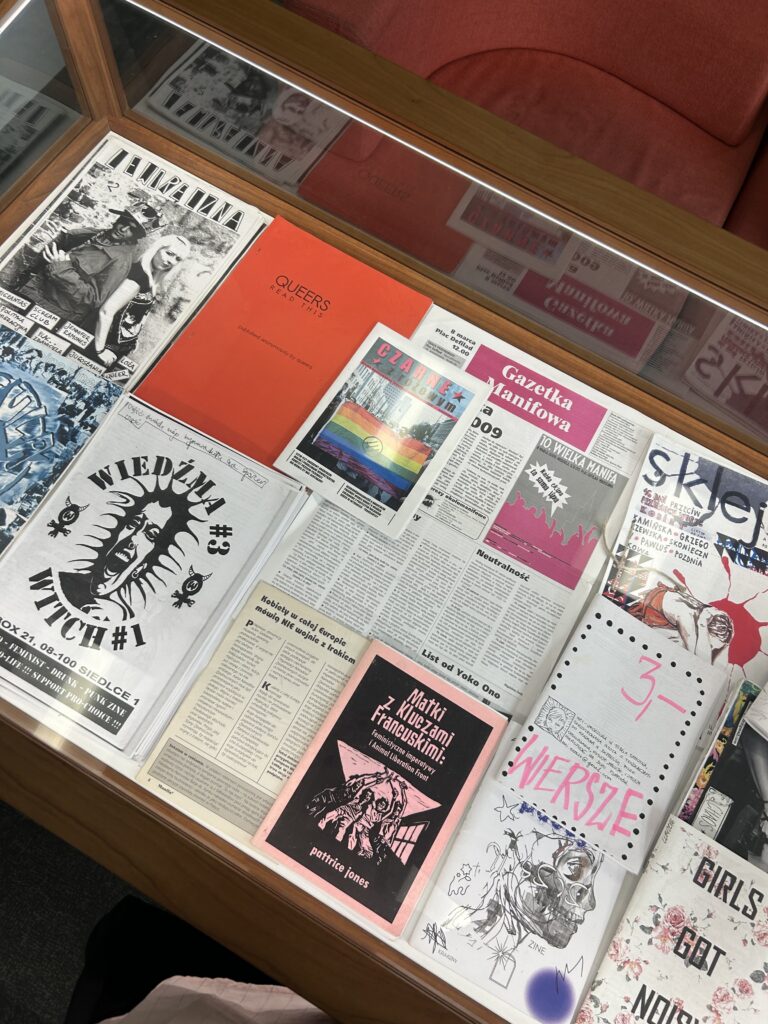
After allowing people to look through these zines, I was able to give a short talk on my work at ReMedia Infrastructure, how this research came to be and my interventions about place and location in relation to these zines. Here, I spoke specifically about the diverse number of discourses, beyond only feminist and ‘queer’ that were embedded in these zines. I argued that these zines could act as a framework for those in this place and other places to think about how anarchafeminist principles can apply to a wide range of local and global issues, like Indigenous sovereignty, environmental justice, harm reduction, poverty, colonialism, etc., and encouraged people to consider how anarchafeminism may feature into their own lives.
To put this question into practice as a form of research creation, I invited everyone to participate in a zine-making workshop and asked them to make zines based off the anarchafeminist zines on display and my talk. I also asked them in keep in mind the question of what anarchafeminism could mean to them, their lives, and how their own positionalities impact that question.
By melding together of all these different elements: the zine exhibits which gave familiarity with the zines, my research talk, and the capacity to do something with this information through zine-making, allowed event participants to ask their own questions about these zines, provide their own contexts and make connections that were specific to themselves. For example, one of the questions that I received after my talk was if any of the zines mentioned anything about disability in a feminist and queer perspective, which was a question I did not quite have an answer to. However, after looking through some of those zines together, we found writings in the zine Cyber Pussy about disability. Other questions included how I was able to make these connections on my own as these zines were in Polish, and getting information about Dr. Barbara Dynda, whose doctoral research dives even more intimately into these anarchafeminist zines.
I was able to see and understand how people were making their own connections, theories and relationships with these zines based on their identities and positionalities, while taking into account the place they were inhabiting (on Syilx land or other Indigenous lands, for example), their migratory histories, and complex feelings that emerge from inhabiting place and space. Not only did looking at these zines activate a sense of curiosity for people at the event, but it also influenced people to make these zines and put their thoughts and feelings as represented through them.
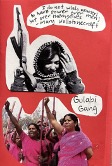
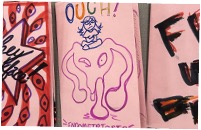
This point was proven further through the zines that were made during the event, which were diverse in content and personality, which acts as an example of why zine-making is such a powerful way to working outside hierarchal systems: “As expressions of insurgencies, resistance, and protest, zines amplify stories that often go untold within a dominant culture, or more explicitly, within coloniality” (Liu et al. 656). Some of these untold conversations can vary from extremely personally to social, economic and political, and often act as an enmeshment of both. Topics from artistic burnout to racialized women’s feminisms, women’s health, community, etc, were tackled through these zines, and created a space for people to name and express what is otherwise taboo to discuss in everyday life.
In this way, I would argue that this event and project, enabled creative expression and analysis that acted as a parallel to the work produced by feminist and queer groups in post-Soviet Poland. However, still, this place of the Okanagan, amidst its’ multiculturalism, consisted of a broader range of topics and ideas that can be arranged together as constellations of co-resistance, named by Leanne Betasamosake Simpson. Therefore, this project of zines analysed through place-based analysis allows for a transgression of borders to “shed light on transnational dimensions of racialized colonial oppressions…and meaningfully enact healing and decolonial solidarity” (Atallah et.al 682).


Works Cited
Atallah, Devin G., et al. “Transnational Research Collectives as ‘Constellations of Co- Resistance’: Counterstorytelling, Interweaving Struggles, and Decolonial Love.” Qualitative Inquiry, vol. 28, no. 6, July 2022, pp. 681–93. SAGE Journals, https://doi.org/10.1177/10778004211068202.
Liu, Rossina Zamora, et al. “Our Stories of Origins: Decolonial Healing through Zines and Zine-Making.” American Psychologist, vol. 80, no. 4, May 2025, 2026-27795-016, pp. 655–69. EBSCOhost, https://doi.org/10.1037/amp0001453.
The ‘New Reality’ of B.C. Wildfires Is Anything but ‘Normal’ | The Narwhal. 14 Aug. 2026, https://thenarwhal.ca/bc-wildfires-data/. Interview.
[AS2]https://thenarwhal.ca/bc-wildfires-data/